Parys – Free State

By Sodwana Bay

Parys (pronounced /ˈpɑːreɪs/) is a town situated on the banks of the Vaal River in the Free State province of South Africa. The name of the town is the Afrikaans translation of Paris. The name was given by a German surveyor named Schilbach who had participated in the Siege of Paris during the Franco-Prussian War and the location next to the Vaal reminded him of Paris on the River Seine. The area of Parys also includes the two townships Tumahole and Schonkenville. History In the early 1870s, towns in the northern Free State were situated very far apart and members of different churches had to travel great distances to participate in religious services. It was then decided by the Ring of the Dutch Reformed Church to implant the idea of a congregation north of the Rhenoster River into the minds of the residents of the farm Klipspruit, on the Vaal River, which was owned by four van Coller brothers. After long deliberation by the brothers, the first erven were laid out in 1876, and the little town of Parys was born. The first few years of existence did not bring much development to the town, but the fact that it was situated en route to Johannesburg from the south, meant that the gold rush of 1886 on the Witwatersrand brought prosperity and wealth to Parys as it was used as a stopover and later as trading post. The outbreak of the Anglo-Boer war in 1899 brought the bustling town to a standstill as many ‘burgers’ had to leave the town to fight in the war. The town and surrounding area was the scene of much guerilla warfare because, surrounded as it is by hills and the river being full of woody islands, it was an ideal place for snipers. General de Wet ensured that good use was made of the natural advantages provided. Some remains of forts are still visible today in the hills around the town. The completion of the railway sideline to Parys in 1905 meant that Parys had suddenly become more accessible to the public and this in turn led to the growth of the town as a holiday resort and industrial centre. The town was now being marketed as The Pride of the Vaal and city dwellers flocked by train to the lush green river banks and special swimming facilities and accommodation provided by the Village Management Board of the time. Bungalows were built on Woody Island and were serviced by the Woody Island Ferry. Unfortunately this venture did not last very long due to the inaccessibility of the island during flood periods. By now, residents of the town had felt for quite some time that a bridge across the Vaal River was no more than its just due. The Woody Island Ferry service crossed on to Woody Island and from there another ferry completed the crossing. The service was indifferent and accidents happened frequently. Farmers on the Transvaal side even preferred to go to Potchefstroom, forty eight kilometres away, rather than face the expense of the ferry crossings. Towards the end of 1913, Tenders were asked for a reinforced concrete bridge over the Vaal, and the contract was finally awarded to a Mr Warren. The work was started in May 1914. The outbreak of the First World War three months later, caused long delays and the bridge was only finished and opened for traffic around Christmas 1915. As a consequence of the bridge over the Vaal, trade grew and Parys was seen as a new market for farmers from the then Transvaal side. Many new buildings were built as more and more traffic ran through the town. Not many of the original buildings and historic places remain today. The current Parys Palm Court Hotel is still one of the surviving turn of the century buildings (the Parys Hotel), as is the museum (once the magistrates office) and “Moedergemeente” Church in the centre of town. There are, however, quite a few original and beautiful old houses remaining in and around town. Industries that have come and gone is the Orange River Canning Company, Parys Basket Works that used a special kind of willow planted on the river banks, a jam factory, boat building factory, cold drink factory and Parys Roller Milling Company. By the middle 1950s big industries like ARWA, BASA (nuts and bolts factory), Vaalrivierse Tabakkooperasie, Vetsak (agricultural co-op which was founded in Parys) and Metro Clothing Company had settled in the industrial area of Parys. Only a handful of industries remain today, and, like in the early days, the town is becoming increasingly popular as a weekend and holiday destination to people wanting to escape the pressures of city life. Tourist attractions Many artists have settled in the town and many new interesting shops and attractions make it the ideal breakaway close to Gauteng and big centres. A unique attraction in Parys, the suspension bridge, was built in 1918 to connect Golf Island to the town. The current Town Hall was built in the 1930s in the typical Art Deco Style, after the original town Hall was destroyed by a fire. Parys is in the 5 km buffer zone of the Vredefort Dome World Heritage Site. Notable citizens Springboks great Frik du Preez, named South Africa’s rugby player of the 20th century, was educated at Parys High School, although he was born in Rustenburg. Former NFL (American football) place kicker Gary Anderson was born in Parys, although raised in Durban. Parys was the original home of Johann van Schalkwyk, designer of the 2010 World Standards Day poster for the International Organization for Standardization (ISO) Furthermore, Parys and the township Tumahole is home to the Premier Minister of the Free State Province Ace Magashule. One of the most outstanding citizens of Parys/Tumahole is Stompie Seipei who was a freedom fighter during the time of Apartheid. Stompie joined the fight at an age of only 10 years, got arrested a few times and was kidnapped on 29th…

Sodwana APP review – 5 STARS!!!

By Sodwana Bay

Sodwana Bay App is a must-have for anyone exploring South Africa’s premier diving and adventure destination. It combines practical tools like dive site guides, wildlife tracking, and activity booking with a sleek, intuitive design that makes planning your trip effortless. 🌊 Overview The Sodwana Bay app is designed to transform how visitors experience one of South Africa’s most iconic coastal treasures. Whether you’re a scuba enthusiast, wildlife lover, or adventure seeker, the app centralizes everything you need to plan, book, and enjoy your stay in Sodwana Bay. 🐠 Key Features 🌍 Why It Stands Out What makes Sodwana Bay app unique is its integration of adventure and convenience. Instead of juggling multiple websites or tour operators, users can manage everything in one place. The app also reflects the spirit of Sodwana Bay—immersive, adventurous, and community-driven. 📱 User Experience Reviews highlight the app’s intuitive design and seamless performance. Users describe it as fun, engaging, and reliable, with regular updates that enhance stability. The interface is clean, making navigation easy even for first-time visitors. 🏝 Practical Benefits ✨ Final Thoughts The Sodwana Bay app is more than a travel tool—it’s a gateway to adventure and conservation. By blending technology with nature, it empowers visitors to fully immerse themselves in the beauty of Sodwana Bay while staying informed and prepared. If you’re planning a trip to KwaZulu-Natal’s coastline, downloading this app is the smartest way to ensure your experience is smooth, memorable, and deeply connected to the environment.


M-Vula Online Gate Booking

By Sodwana Bay

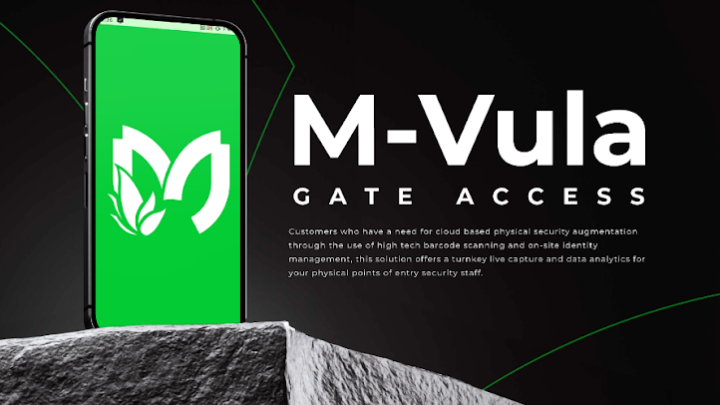
The M-Vula Online Gate Booking System Is Still Operational as of November 2025. It remains available via its Android app, offering cloud-based access management for facilities of various sizes. 🚪 M-Vula Online Gate Booking: A Smart Solution for Secure Access In a world where security and convenience go hand in hand, the M-Vula Gate Access system has carved out a niche as a reliable digital solution for managing physical entry points. Designed to streamline gate bookings and enhance on-site identity verification, M-Vula offers a cloud-based platform that supports barcode scanning, live data capture, and analytics for entry management. Whether you’re overseeing a residential estate, corporate campus, or event venue, M-Vula promises a turnkey solution that empowers gate staff with real-time tools to verify identities and manage access efficiently. 🔍 What Does M-Vula Offer? Here’s a breakdown of its core features: These features make M-Vula particularly useful for high-traffic environments where manual gate logs are no longer practical. 📱 Is M-Vula Still Active? Yes, the program appears to be fully operational. The M-Vula Gate Access app is live on the Google Play Store, with its most recent update released in May 2025. This suggests ongoing development and support from its creators, Latroforce. The app is geared toward users who need scalable access control—from small facilities to large estates. While the website m-vula.com may not offer extensive public-facing updates, the app remains the primary interface for users and gate staff. It’s advisable for new users to download the app and explore its features directly. 🛠️ Who Should Use M-Vula? M-Vula is ideal for: 🧭 Final Thoughts As South Africa continues to embrace digital transformation in security and logistics, platforms like M-Vula are leading the way. Its continued availability and recent updates confirm its relevance in 2025. For those managing gated environments, M-Vula offers a smart, scalable, and secure alternative to manual systems. If you’re considering a gate access solution, M-Vula is worth exploring—especially if you value mobility, data insights, and streamlined visitor management. Sources:M-Vula Gate Access – Google Play Store


What a God we have!

By Sodwana Bay

What a God we have! And how fortunate we are to have him, this Father of our Master Jesus! Because Jesus was raised from the dead, we’ve been given a brand-new life and have everything to live for, including a future in heaven—and the future starts now! God is keeping careful watch over us and the future. The Day is coming when you’ll have it all—life healed and whole. 1 Peter 1:3 MSG 0 0 0 0 The post What a God we have! appeared first on South African NEWS LINK. Source: South African LINK


Today, open your eyes

By Sodwana Bay

Today, open your eyes Psalm 119:18 One day Elisha and his servant awoke to find the house they were in surrounded by an army of enemy soldiers. His servant panicked and asked, ‘What are we going to do?’ So Elisha prayed, ‘LORD, open his eyes so that he may see’ (2 Kings 6:17). Suddenly he saw their enemies surrounded by an even bigger army of angels. On their way home to Emmaus, Cleopas and his companion were heartbroken because Jesus, the One in whom they’d placed their hopes, had been crucified and buried. Out of nowhere a stranger joined them on their journey, and when they reached home they invited him to stay for supper. As he prayed and pronounced a blessing over their meal, the eyes of Cleopas and his companion were opened and they recognised that the stranger was none other than Jesus Himself (see Luke 24:13-35). A man on a commuter train kept gazing out the window and saying, ‘Wonderful; just wonderful!’. What was he looking at? Run-down apartment buildings and rubbish spilling over onto the pavement! After hearing him say ‘Wonderful’ four or five times the lady beside him remarked, ‘It doesn’t look too wonderful to me’. Whereupon the man replied, ‘I’ve been blind for the past thirty years. But through the skill of a surgeon, the generosity of a donor, and a corneal transplant, I’ve been given the gift of two new eyes. And to me, everything I see is wonderful.’ Grumbling blinds you to God’s blessings, but gratitude opens your eyes to enjoy them. So today, ask the Lord to open your eyes to all the ‘wonderful things’ that surround you. Soul food: Num 29-31; Mark 9:1-29 0 0 0 0 The post Today, open your eyes appeared first on South African NEWS LINK. Source: South African LINK